Whoa, seriously now. I kept thinking seed phrases were the only safe option for years. My instinct said there had to be a cleaner, less fragile way. Initially I thought hardware wallet chips alone would solve every problem, but then I began seeing practical friction points—lost phrases, user error, paper burning and families stuck after someone dies—which slowly changed my view. This piece digs into a different approach: smart-card NFC wallets.
Really—yep, seriously. NFC smart-cards like Tangem change the mental model from memorizing phrases to owning a physical, tamper-resistant object. They pair with phones over near-field communication and perform private key ops inside secure chips. On one hand this reduces human error dramatically; on the other hand the idea of a “single card” raises valid concerns about loss, backup, and inheritance, so you still need thoughtful processes around custody and redundancy. More on that in a bit.
Hmm… okay, listen. I’ll be honest: I was skeptical at first because smart-cards sounded gimmicky to me. My first impressions were colored by cheap RFID cards that held nothing secure at all. Actually, wait—let me rephrase that: not all cards are equal, and the difference between a secure element chip and a simple stored value tag is night and day when you consider attack surfaces and real-world usage patterns. So here’s how these NFC wallets really work.
Here’s the thing. A secure NFC wallet contains a certified secure element that stores private keys and executes signing operations without revealing secrets. The phone merely sends transaction data and receives a signature, minimizing the blast radius of mobile compromise. On a technical level the secure element uses asymmetric cryptography, often ECDSA or EdDSA, and performs operations inside a tamper-resistant boundary, which prevents key extraction even if someone gains low-level access to the device firmware. This architecture creates a user experience that’s straightforward and robust.
Wow, very neat. For users who dread writing down 24 words and stuffing them in a drawer, this is liberating. You tap a card and approve a transaction on your phone, and the private key never leaves the chip. There are also clever approaches to backups: multicards, social recovery schemes that split keys using threshold cryptography, and metal backup plates that store compact secrets safely offline—each option trades convenience for redundancy in different ways. None of these are flawless, though.
Seriously? Loss is the obvious fear; physical damage is another. But consider the alternatives: burned or lost piece of paper that contains your entire wealth. On the other hand a card can be duplicated into multiple secure elements in a controlled ceremony, or you can design a recovery scheme that uses multiple trusting parties, but these solutions require some technical discipline that many users lack. That’s the education gap we need to bridge.
I’m biased, okay. I love the idea of a clean product experience that reduces cognitive load. It fits with the way most people already carry a wallet or a phone. Though actually, it’s important to weigh regulatory and vendor risks too—if a proprietary card system locks you into a single company or requires obscure firmware updates, you may face long-term availability issues. So pick vendors carefully.
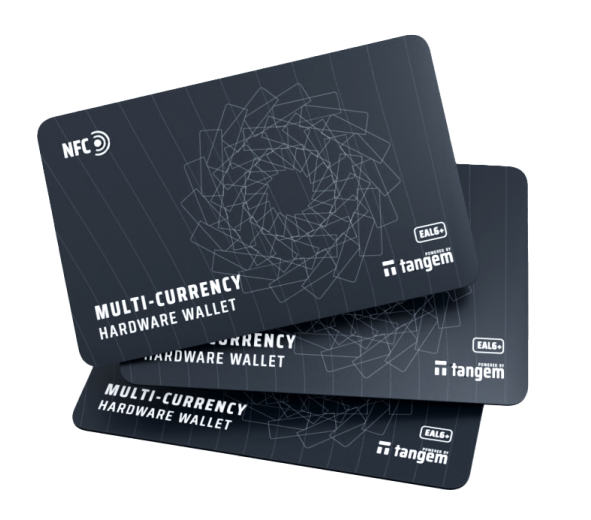
A practical pick and what to watch for
Check this out—I’ve been testing a few cards and one practical favorite is tangem wallet because it balances simplicity and security. The setup is almost shockingly simple: tap, initialize, and store the card in your wallet like a bank card. My first impression was: somethin’ about the user flow felt intentionally minimal, which is good for mainstream adoption. But here’s what bugs me about some products—support pages that bury recovery options, or marketing that oversells invulnerability, which is misleading and dangerous.
Okay, so check the verifiable specs before you buy. Look for certified secure elements (Common Criteria or FIPS where applicable), audited firmware, and transparent update policies. Also ask about emergency recovery flows—can the vendor provision a second card from the original if you can prove ownership? Do they hold keys, or is the card truly self-custodial? These are non-trivial differences. If you treat the card as a single point of failure, then you’ve just traded one scary failure mode for another unless you plan backups properly.
One practical pattern I like: use two cards. Keep one active in a daily wallet and stash a sealed backup in a different secure location, maybe with a trusted family member or safe deposit box. Another is social recovery—split a seed or use threshold keys between people you trust. Neither is perfect; both require policy and discipline. But in everyday life the card approach lowers friction so dramatically that people actually secure their assets instead of procrastinating or misplacing a scribbled seed.
There are also user-experience benefits that matter. Tap-to-pay style approval feels familiar to anyone who’s used contactless cards or phone wallets in the US. That lowers the adoption barrier because you’re not asking people to learn a new ritual. And remember: attackers often exploit friction—if security is too complex, users find dangerous shortcuts. Simplicity can be a security feature.
FAQ
Is a smart-card really safer than a paper seed phrase?
In many practical scenarios, yes—because a secure element resists extraction and the workflow avoids human error. Though actually, it depends on your backup strategy; a lost or destroyed card without backups is catastrophic, so plan redundancy. I’m not 100% sure every user will follow those steps, but the potential for safer everyday use is high.
What about vendor lock-in and firmware updates?
Good question. Choose vendors that publish firmware practices and allow recovery without cloud-dependence. If a vendor forces online-only recovery or keeps secret keys, that’s a red flag. It’s worth paying attention to community audits and open standards—those lower long-term risk.
Can smart-cards support multiple cryptocurrencies?
Many do, but support varies by card and firmware. Check supported coin lists and whether future updates will add tokens you care about. Also think about interoperability if you plan to migrate to other wallets later—proprietary formats can make migration harder.